The Auto-Pilot Problem in 2026: Why Users Stop Thinking When Booking Rides
You’re not deciding—you’re reacting. Discover why users go on “auto-pilot” when booking rides and how it leads to higher costs in 2026.
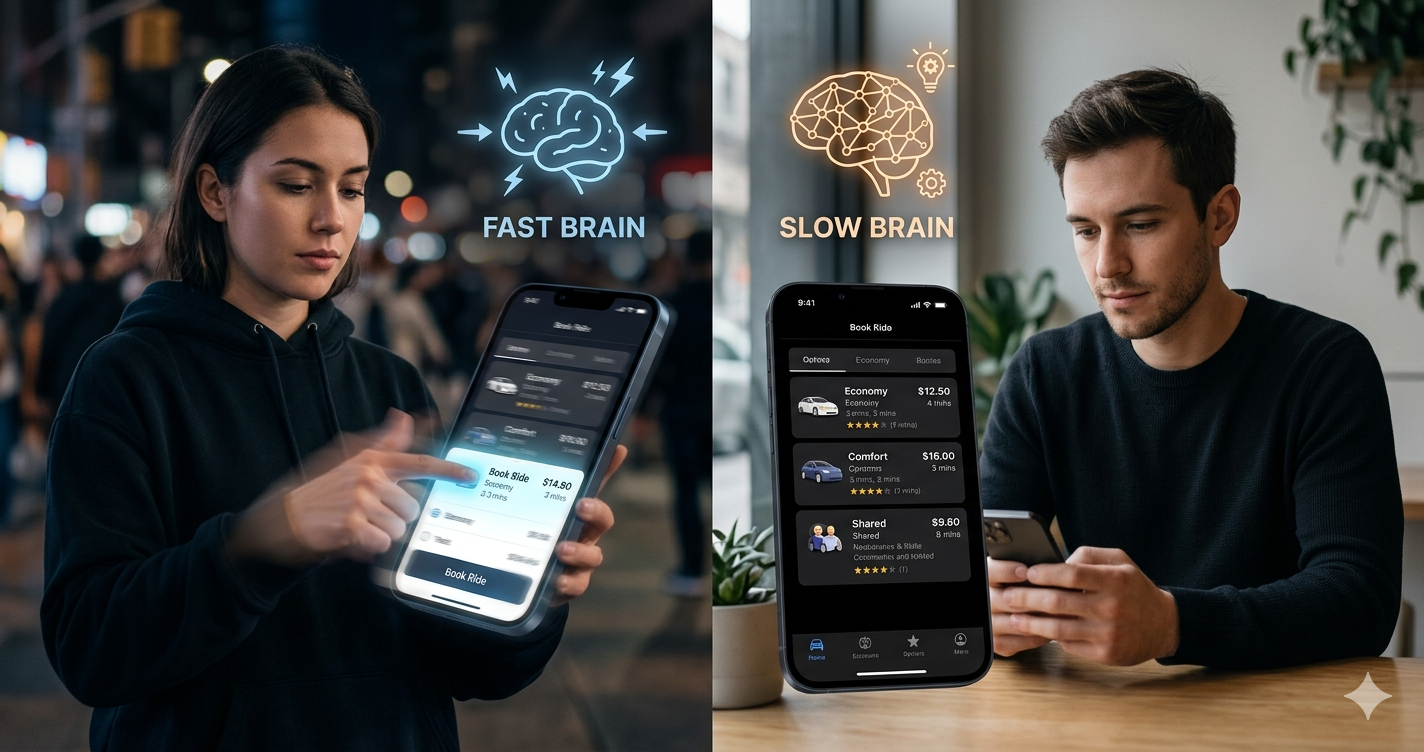
The Auto-Pilot Problem (2026) You’re not deciding—you’re reacting What is auto-pilot behavior? Auto-pilot behavior happens when people act without consciously thinking through their decisions. In ride booking, it looks like this: Open app Tap destination Accept first option Confirm The entire process can take less than 20 seconds—and almost no real decision-making. Why it happens Habit repetition (you’ve done it many times) Desire for speed and simplicity Trust in the app’s system Low mental effort required The brain prefers fast, effortless decisions—even if they are not optimal. The key insight Most users believe they are choosing the best ride. In reality, they are simply following a routine. And routines rarely lead to optimal outcomes. The hidden consequences Accepting higher prices without noticing Ignoring better alternatives Paying for speed unnecessarily Missing opportunities to save Real-world scenario A user opens an app during rush hour. Price shown: $22 Without thinking, they accept. But: Waiting 5 minutes could reduce the price Another option might be cheaper A different provider could offer better value The extra cost comes from reacting—not deciding. The speed trap Speed feels efficient—but it can be expensive. When decisions are rushed: Comparison disappears Awareness drops Costs increase How smart users act differently Smart users don’t eliminate convenience—they control it. They pause before confirming They check alternative options They think about value,…