Cheap Ride vs Smart Ride in 2026: Are You Actually Saving Money?
Is the cheapest ride really the best deal? Compare cheap rides vs smart ride choices in 2026 and discover how time, reliability, safety, and hidden costs affect what you really pay.
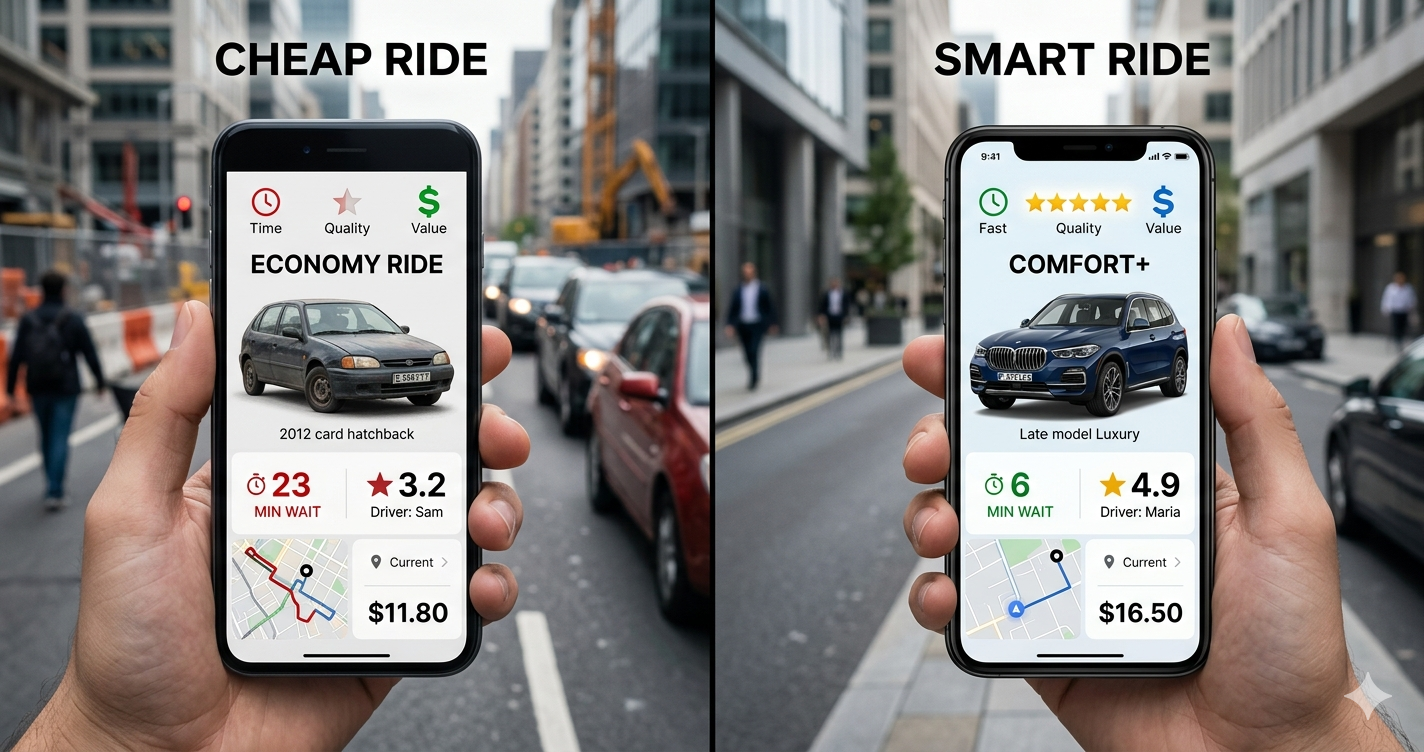
Cheap Ride vs Smart Ride (2026) The cheapest option isn’t always the smartest. The mistake many riders make When most people compare ride options, they focus on one number first: price. If one ride costs less than another, it feels like the obvious winner. But in 2026, transportation decisions are more complex than they seem. A lower fare does not always mean lower total cost. In many situations, the “cheap” ride ends up costing more in time, inconvenience, stress, or poor experience. That is why more users are beginning to think in terms of the smart ride , not just the cheapest ride. What is a cheap ride? A cheap ride is the option with the lowest visible price at the moment of booking. It may look attractive because: the fare is lower than other offers, the discount seems strong, or the user wants to minimize immediate spending. But a cheap ride only measures one part of value: the upfront price. What is a smart ride? A smart ride is the option that gives the best overall value, not just the lowest price. A smart ride considers: price, ETA and wait time, driver rating, vehicle type, reliability, safety and confidence, and whether the choice reduces future stress or hidden costs. In other words, the smart ride asks a better question: What am I really getting for this price? Why this matters more in 2026 In 2026, riders face more variability than ever: changing demand, multiple pricing models, wider service options, and more user choice. This means the lowest price is often…