Fixed Pricing vs Bidding Systems in Ride-Hailing (2026): Who Really Gets the Best Deal?
Compare fixed pricing and bidding systems in ride-hailing. Discover which model gives better prices, control, and transparency in 2026.
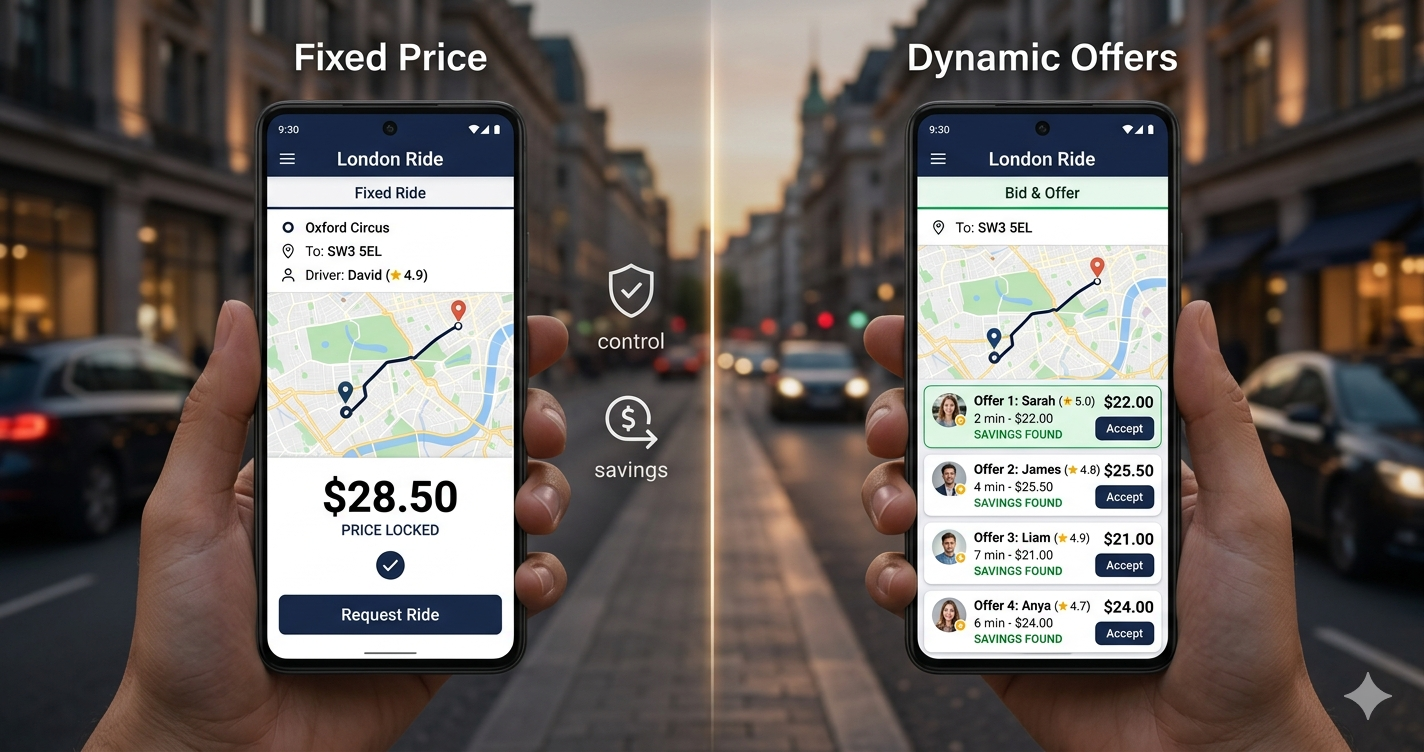
Fixed Pricing vs Bidding Systems (2026) Who really controls the price—you or the app? The two pricing models shaping ride-hailing In 2026, ride-hailing platforms generally follow one of two pricing models: Fixed Pricing: The app calculates the fare automatically Bidding Systems: Users and drivers negotiate the price At first glance, fixed pricing seems simple—but simplicity doesn’t always mean fairness. How fixed pricing works Algorithm calculates fare Based on distance, time, demand Includes surge pricing during peak times The user has no control over the price—it’s take it or leave it. How bidding systems work User proposes a price Drivers accept, reject, or counter User chooses the best offer This creates a real marketplace where price is determined by supply and demand—without hidden algorithms. Side-by-side comparison Factor Fixed Pricing Bidding System Price Control App controls User + driver control Transparency Low High Surge Pricing Yes No forced surge Average Savings 0–10% 20–50% Why fixed pricing can cost more Algorithm includes profit margins Surge pricing inflates costs No negotiation flexibility Why bidding systems can save money Drivers compete for your ride You can start with a lower offer No hidden pricing adjustments When fixed pricing works best Urgent rides Users who want simplicity No time to compare offers When bidding systems win Budget-conscious users Non-urgent trips Users who want control and choice Final conclusion Fixed pricing is simple—but…