Ride-Hailing & On-Demand Services in 2026: Why Prices Are Rising â And How Smart Users Still Save
Learn why ride-hailing and on-demand service prices are rising in 2026, from fuel and insurance costs to platform fees. Compare pricing models, global cost trends, and practical ways users can save 20–50%.
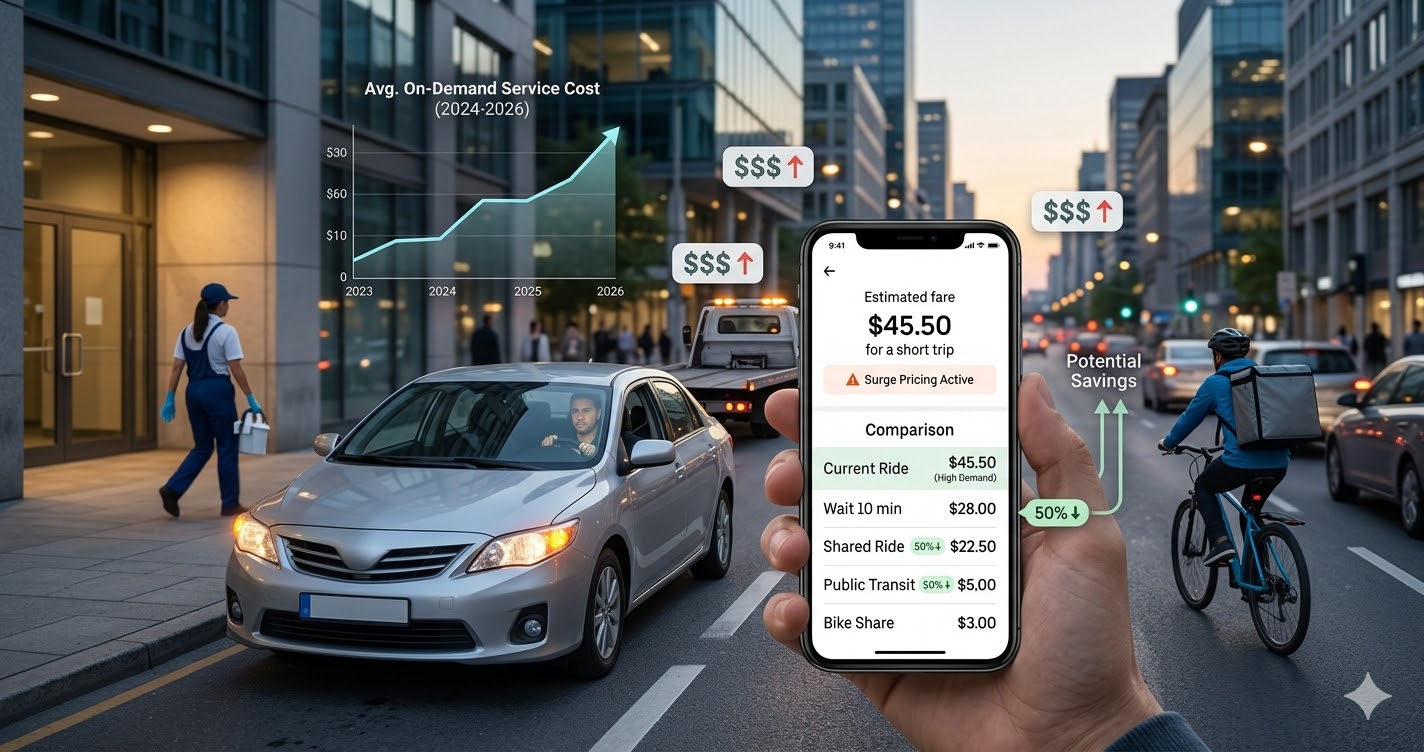
Ride-Hailing & On-Demand Services in 2026 Why prices are rising worldwide — and what riders, households, and budget-conscious users can do to save. The New Cost Reality of On-Demand Living In 2026, on-demand services remain deeply woven into daily life. Millions of people use ride-hailing apps, food delivery platforms, cleaners, movers, towing providers, and other app-based services as part of normal urban living. What used to feel like a convenient luxury has become, for many households, part of the default infrastructure of modern life. But there is a catch: prices are rising. Across many major cities, both mobility and household service costs have increased noticeably since the early 2020s. Users are seeing higher base fares, more visible platform fees, greater volatility during busy periods, and rising hourly rates for services like cleaning, towing, or small moving jobs. This has created a major search behavior shift. Consumers increasingly ask: Why is rideshare so expensive now? How much should a ride cost in 2026? Is ride-hailing still cheaper than taxis? How can I save money on cleaning, towing, and on-demand services? The answer is not simple because prices are being pushed upward by multiple layers at once: fuel and charging costs, insurance inflation, labor shifts, platform economics, vehicle maintenance, and rising service demand in dense cities. What Is Driving the Price Increases? The biggest reason prices feel higher in 2026 is that the cost structure of the…