Ride-Sharing vs Car Ownership vs Public Transit in 2026: Global Cost, Time, Safety, and Sustainability Comparison
Compare ride-sharing, car ownership, and public transit in 2026 with global statistics on cost, emissions, convenience, and safety. A data-driven guide for commuters, travelers, and budget-conscious urban residents worldwide.
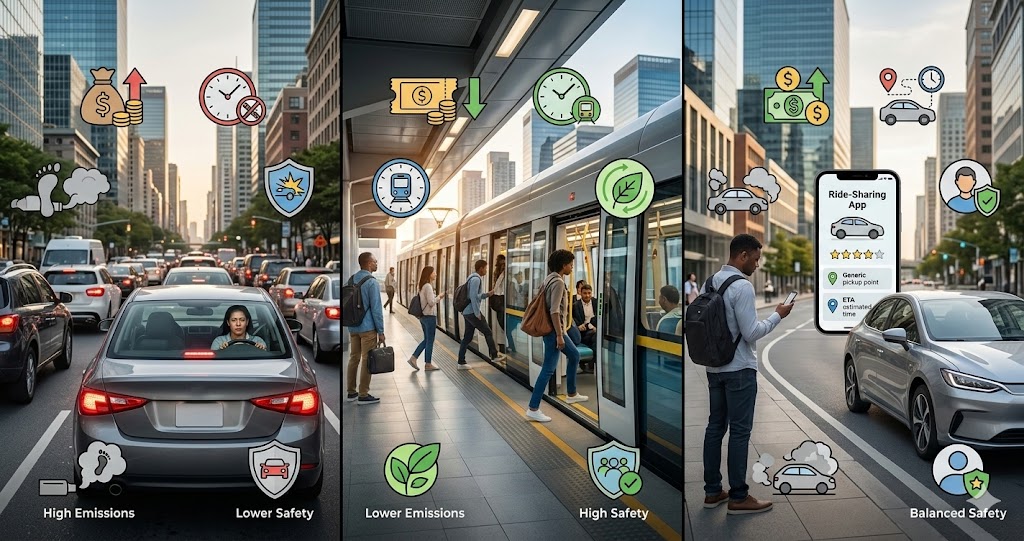
Ride-Sharing vs Car Ownership vs Public Transit in 2026 A global comparison of transportation cost, convenience, safety, and sustainability for modern commuters. The Transportation Question Defining Urban Life in 2026 In 2026, transportation is no longer just a matter of getting from one place to another. It is now a financial decision, a lifestyle decision, an environmental decision, and increasingly a digital decision. Around the world, commuters are reevaluating how they move through cities and between regions. Rising vehicle ownership costs, expanded transit systems, app-based mobility, and climate concerns are pushing people to compare their options more carefully than ever before. For decades, personal car ownership dominated mobility in many countries. Public transit has long been the backbone of dense urban regions, especially in Europe and Asia. Ride-sharing, meanwhile, has emerged as a flexible middle ground: more convenient than buses in some situations, less burdensome than owning a car in others. The question for millions of people is simple but important: Which transportation mode offers the best balance of cost, time, flexibility, and sustainability? Why This Comparison Matters Globally Transportation choices are becoming more important as urban populations continue to grow. More people are living in cities, more roads are congested, and more households are under financial pressure from fuel, housing, and daily living costs. This means that transportation is…