The Communication Gap Effect in 2026: Why Silence Makes Small Delays Feel Like Major Failures
People can accept delays, but they struggle with silence. Discover how timely updates, honest explanations, clear ETAs, and human communication build trust across rideshare, towing, roadside assistance, moving, delivery, cleaning, and service-sharing plat
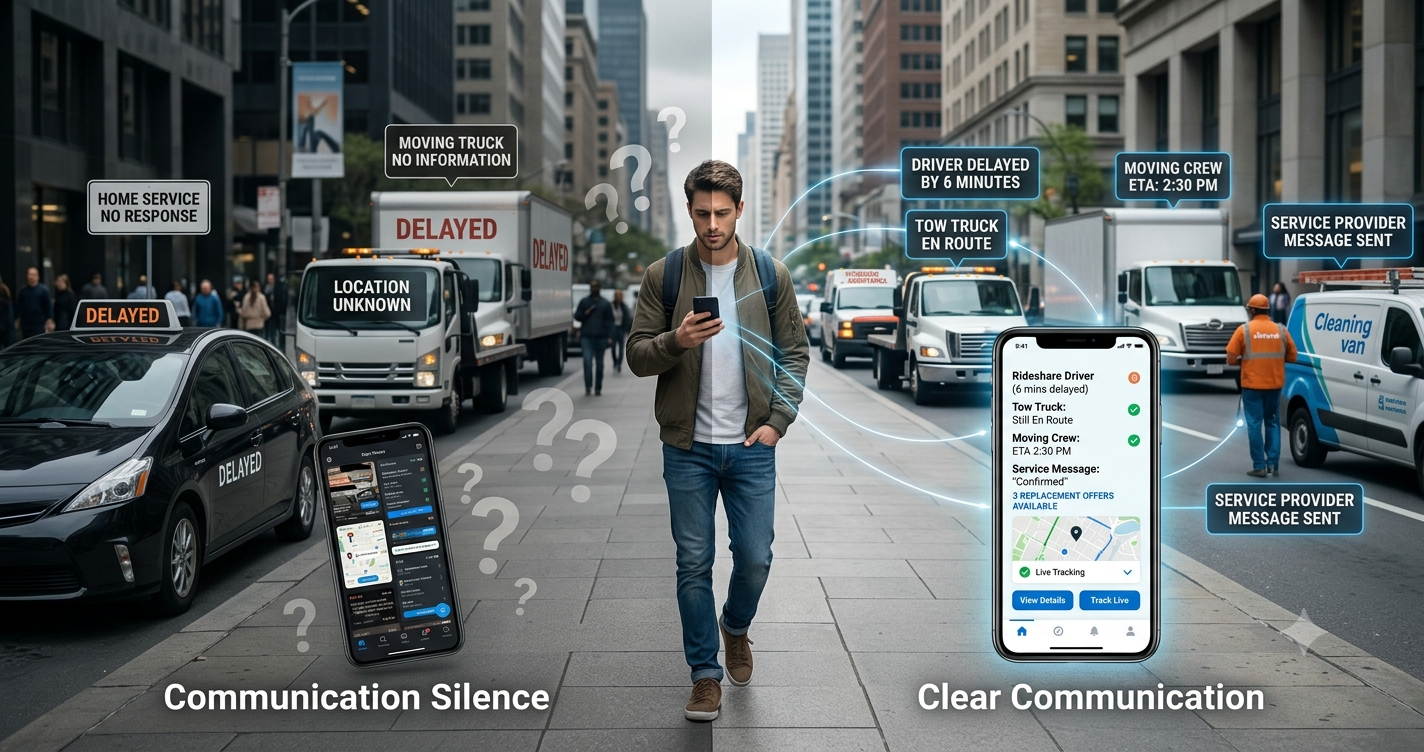
Rideshare Psychology - Customer Communication - 2026 The Communication Gap Effect in 2026 People can accept delays. They struggle with silence. The same delay can create two completely different experiences Imagine that you request a ride for an important appointment. The original arrival estimate is seven minutes. Seven minutes pass. The vehicle has not arrived. The app does not update. The driver does not send a message. You do not know whether the driver is stuck in traffic, looking for the pickup point, completing another trip, or no longer coming. A small delay quickly starts feeling like a major problem. Now imagine the same delay with a different communication experience. Before the original arrival time passes, the app displays: Traffic is heavier than expected. Your driver is still on the way. Updated arrival time: 11 minutes. The driver may also send: Hi, I am delayed at the intersection ahead, but I am still coming to your pickup point. The practical delay is identical. The emotional experience is completely different. In the first situation, the user feels forgotten. In the second situation, the user feels informed. This is the foundation of the Communication Gap Effect . The Communication Gap Effect describes how missing information can make a manageable service problem feel much larger, while timely communication can preserve trust even when the service is delayed. Silence creates room for negative explanations When users do not receive information, they rarely…