The Handoff Effect in 2026: Why Smooth Transitions Build Trust Across Rideshare and Service Sharing
Customers do not experience separate drivers, providers, payments, and support teams - they experience one journey. Discover how smooth handoffs reduce stress and strengthen trust across rideshare, towing, roadside assistance, moving, delivery, cleaning,
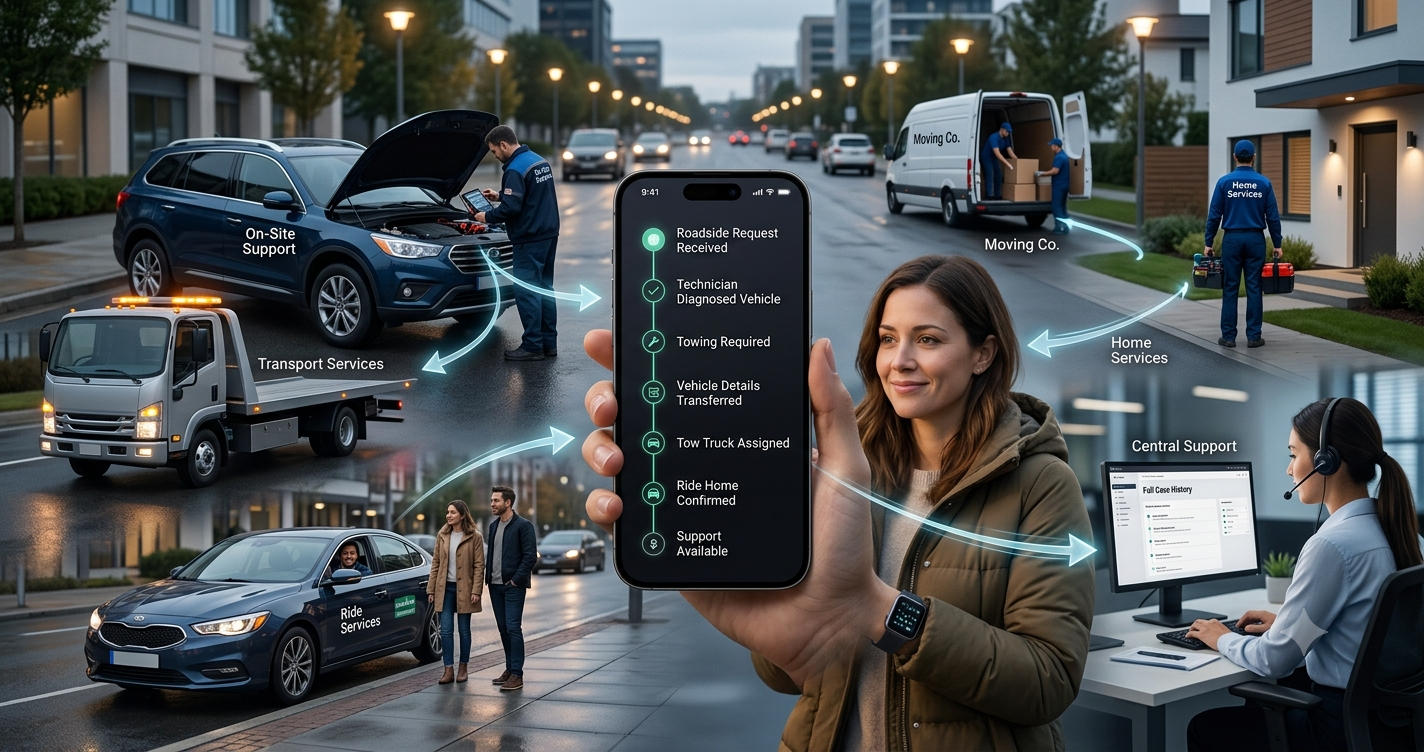
Customer Psychology - Service Continuity - 2026 The Handoff Effect in 2026 Customers do not experience separate systems. They experience one continuous journey. The moments between services matter more than they appear Imagine that a driver needs roadside assistance after a vehicle breaks down. The user first requests help for the mechanical problem. A technician reviews the situation and determines that the vehicle cannot be repaired safely at the roadside. The vehicle now requires towing. The user may also need a ride home. From the platform's internal perspective, this situation may involve three separate services: roadside assistance, towing, passenger transportation. From the user's perspective, however, it is one problem. Their vehicle stopped working, and they need a complete solution. If the customer must repeatedly explain the breakdown, re-enter the vehicle location, search for another category, create a second request, and arrange transportation separately, the experience begins to feel fragmented. The platform may technically provide every required service. Yet the customer may still feel unsupported because the services do not connect smoothly. This is where the Handoff Effect becomes important. In this article, the Handoff Effect describes the emotional response customers experience when responsibility moves from one stage, provider, service category, or support channel to another. A smooth handoff creates continuity. A broken handoff creates uncertainty.…