The Closure Effect in 2026: Why a Clear Ending Builds Trust in Rideshare and Service Sharing
A ride, tow, move, delivery, or home service is not truly finished until the customer understands the outcome. Discover how completion messages, final receipts, proof of service, ratings, and support options build trust across on-demand platforms.
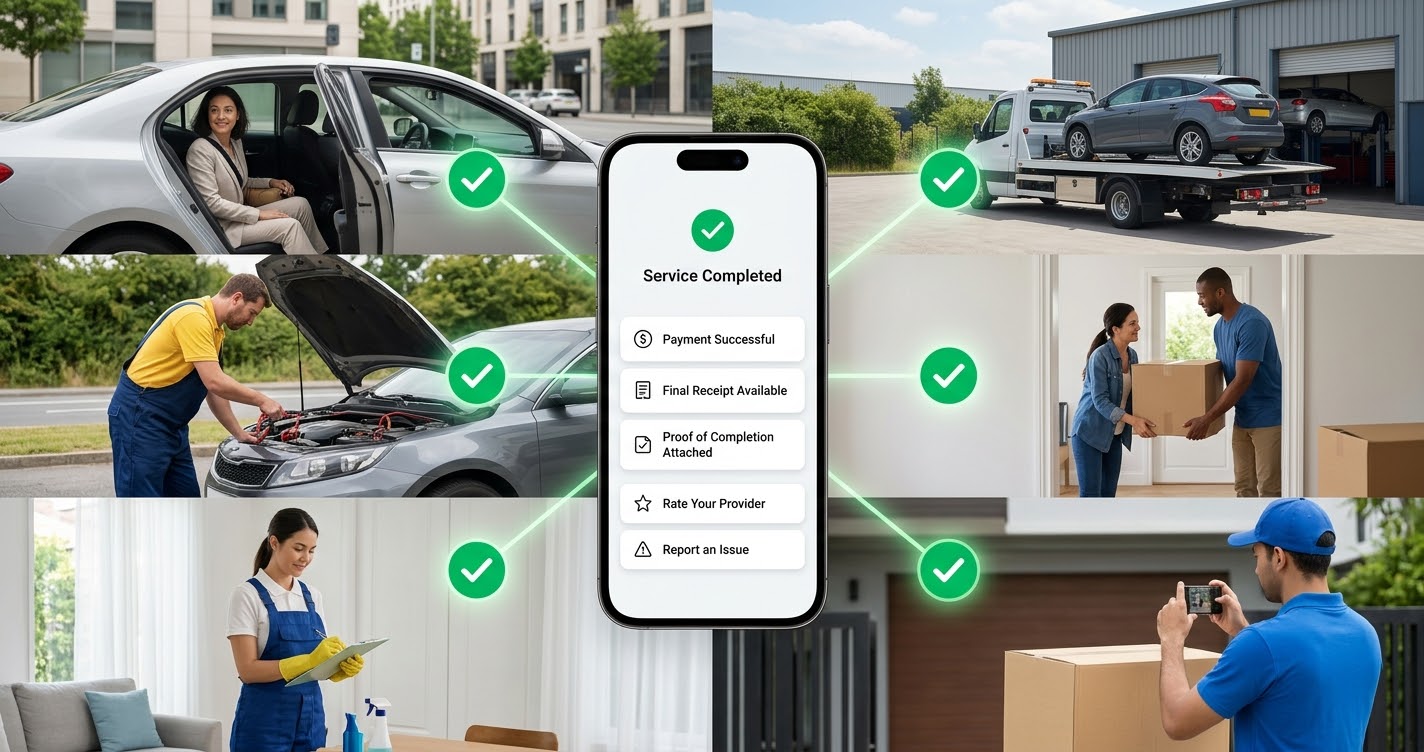
Rideshare Psychology - Service Completion - 2026 The Closure Effect in 2026 People do not only need the service to end. They need to understand that it is finished. When a service ends but the experience does not feel complete Imagine that a rideshare trip reaches its destination. The passenger leaves the vehicle. The driver continues to the next request. From a transportation perspective, the trip is finished. But the customer may still have questions. Was the trip officially completed? What was the final fare? Was the payment successful? Were any additional charges added? Can the passenger report an issue? Will a receipt be available? Until these questions are answered, the experience may remain psychologically open. The physical service has ended. The mental process has not. This is where the Closure Effect becomes important. In this article, the Closure Effect describes the sense of relief and confidence users experience when a platform clearly confirms that a ride, task, payment, delivery, or service request has reached a complete and understandable ending. The human mind dislikes unfinished situations Unfinished situations continue occupying attention. A customer may repeatedly check the app because they are unsure whether the provider marked the job as complete. A rider may review their payment account because the final price was not shown clearly. A homeowner may wonder whether a cleaner, repair professional, or delivery provider completed every part of the request.…