The Recovery Effect in 2026: Why the Response to a Problem Matters More Than the Problem Itself
Drivers cancel, providers get delayed, and plans sometimes change. Discover how fast rematching, honest communication, transparent solutions, and meaningful user control can rebuild trust across rideshare and service-sharing platforms.
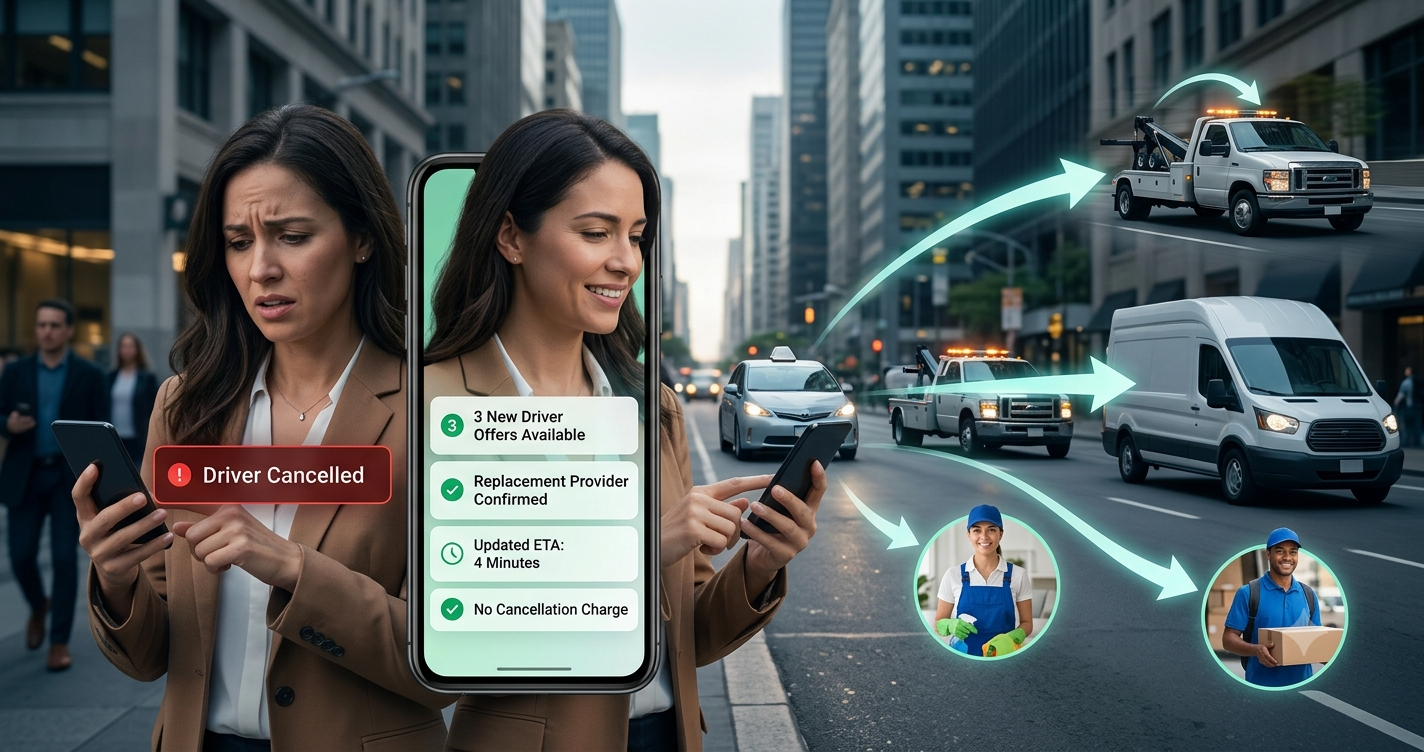
Rideshare Psychology • Service Recovery • 2026 The Recovery Effect in 2026 People may forgive a delay, but they rarely forgive feeling abandoned. The moment a normal experience becomes a problem Most rideshare and service-sharing experiences begin with a simple expectation. A rider expects a driver to arrive. A stranded motorist expects a tow truck to come. A family expects movers to arrive at the agreed time. A homeowner expects a cleaner, repair professional, or delivery provider to complete the requested service. When everything follows the expected path, the customer rarely thinks about the system behind the experience. The request is accepted. The provider arrives. The service is completed. But when something interrupts that sequence, the customer suddenly becomes highly aware of every detail. A driver cancels. A provider is delayed. The wrong vehicle is assigned. The task requires equipment the provider does not have. A price changes unexpectedly. A service professional does not arrive. At that moment, the quality of the platform is no longer judged only by the original service. It is judged by what happens next. The first emotional reaction is not always anger When a service fails, users may eventually become frustrated or angry. But the first emotional response is often uncertainty. The customer begins asking: Is another driver coming? Do I need to make a new request? Will I be charged? How long will the delay be? Can another provider complete the job? Does anyone…