The Control Effect in 2026: Why Feeling in Control Reduces Stress in Rideshare and Service Sharing
People do not always need more options—they need to feel in control. Discover how transparent prices, provider choice, real-time tracking, ETAs, flexible payments, and user-controlled marketplaces reduce stress across rideshare and on-demand services.
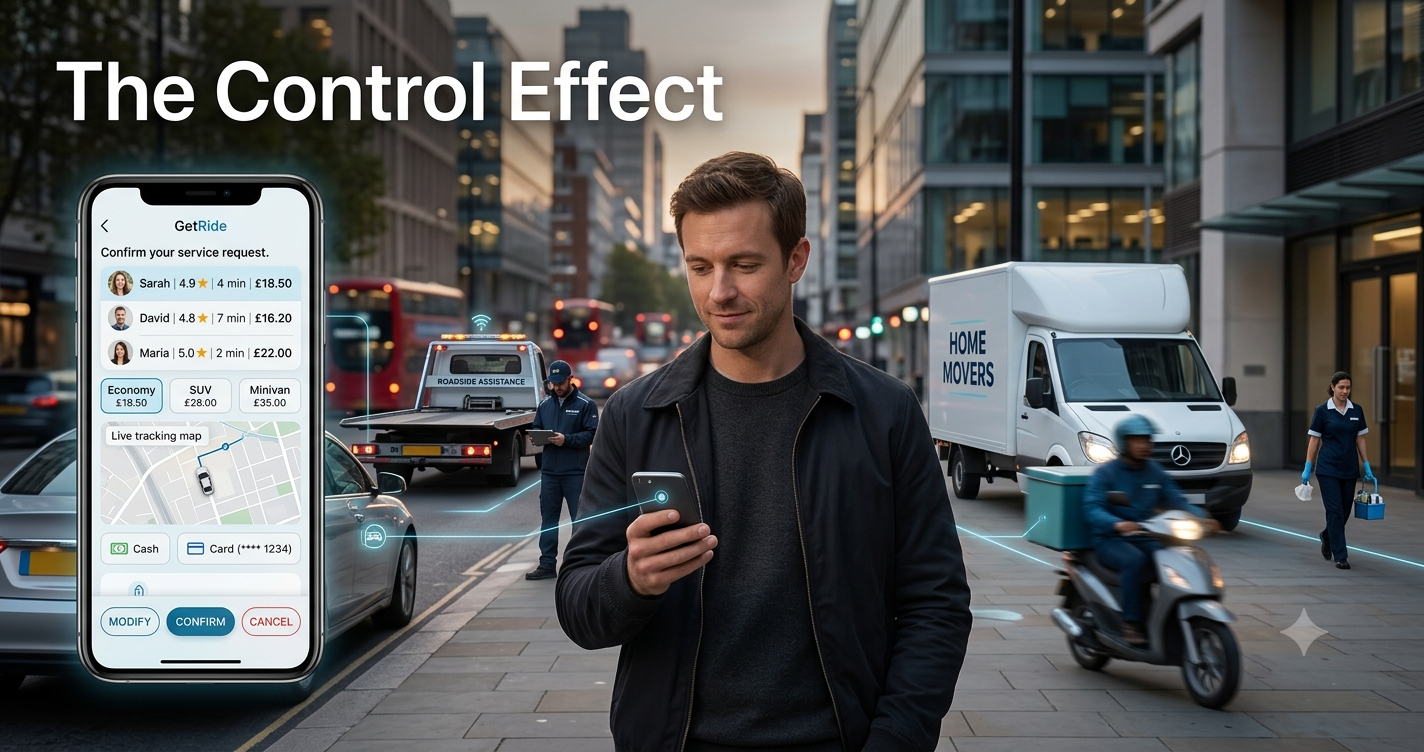
The Control Effect in 2026 People do not always need more options—they need to feel in control. Why the same situation can feel completely different Imagine that you need a ride across the city. In the first situation, an app displays one price, assigns one driver, chooses the matching process, and gives you only two possible actions: accept or cancel. The experience may be fast, but almost every important decision has already been made for you. Now imagine a different experience. You enter the same pickup point and destination, but you can review available offers, compare driver arrival times, examine ratings, choose a vehicle category, decide how you want to pay, and select the option that best fits your priorities. The destination has not changed. The practical need has not changed. But emotionally, the experience feels different. The second experience gives you a sense of participation. You are not simply being processed by a system. You are making a decision. This is the foundation of the Control Effect : the emotional comfort people experience when they can understand, influence, or modify what happens during a ride or service request. Stress grows when people feel powerless Many stressful situations share one common characteristic: people do not feel able to influence the outcome. A vehicle breaks down on an unfamiliar road. A ride is delayed before an important appointment. A moving crew has not arrived at the expected time. A service provider is coming to a private…