The Tracking Effect in 2026: Why Seeing Progress Feels Better Than Waiting
People don't hate waiting. They hate not knowing. Discover how real-time tracking, ETAs, and progress visibility in rideshare and service-sharing platforms reduce stress, build trust, and reshape modern behavior in 2026.
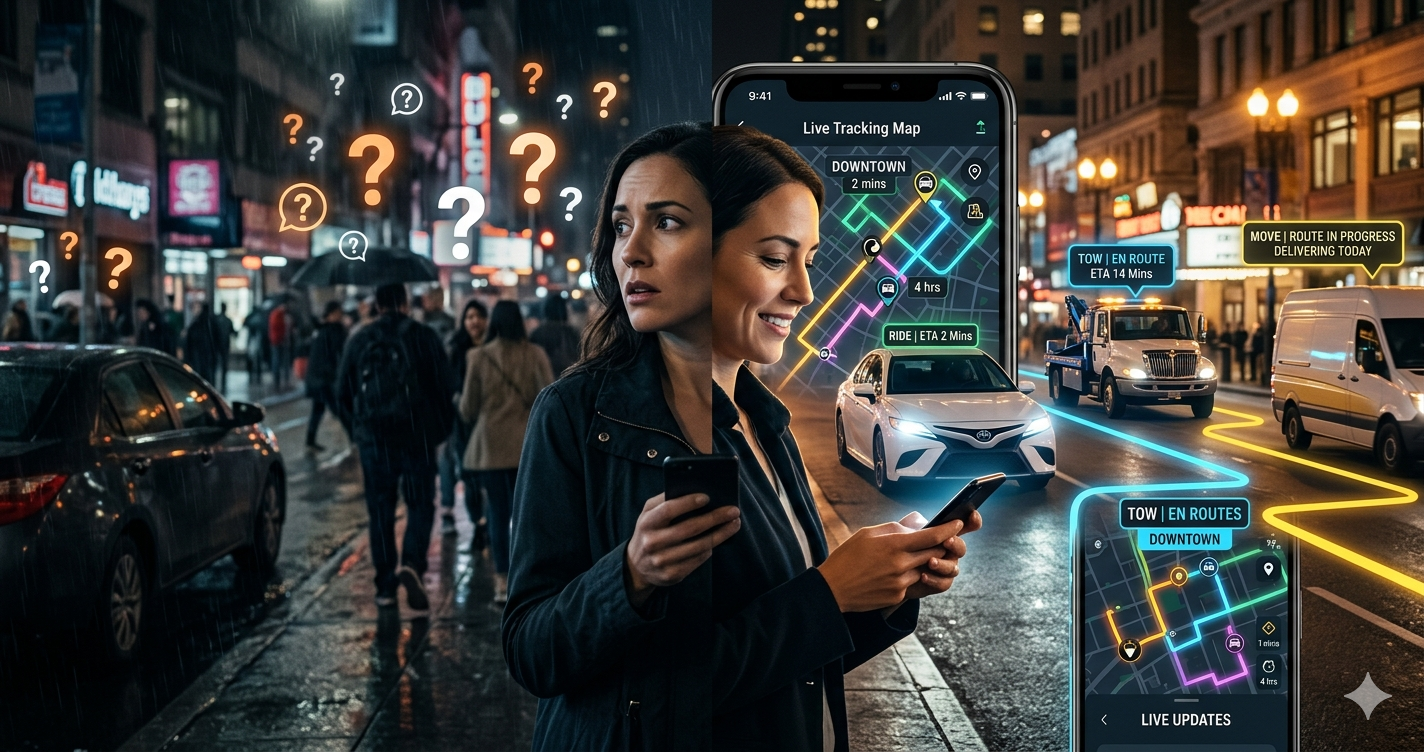
The Tracking Effect (2026) People don't hate waiting. They hate not knowing. The same wait can feel completely different Imagine you request a ride. Five minutes pass. You have no idea where the driver is. You don't know if they accepted the trip. You don't know if traffic is slowing them down. You don't know if they are arriving in thirty seconds or ten minutes. Those five minutes feel surprisingly long. Now imagine a different situation. You request the same ride. The driver appears on a live map. You see the vehicle moving. You see an ETA. You receive updates. The wait is still five minutes. Nothing about time changed. But emotionally, the experience feels completely different. This is the foundation of what can be called the Tracking Effect . The psychological phenomenon where visible progress reduces stress, increases confidence, and makes waiting feel easier. Modern life runs on visibility For most of human history, people waited without information. You called a taxi. You waited. You ordered something. You waited. You requested assistance. You waited. The problem was not always the waiting itself. The problem was uncertainty. Humans naturally dislike uncertainty because uncertainty creates questions. Is help coming? Did they receive my request? Will someone arrive? How long will this take? Should I keep waiting? Each unanswered question creates mental pressure. Modern transportation and service-sharing platforms solved part of this problem by making progress visible.…